Exploring innovative routes in journalism through podcasts
When it comes to journalism in high school, it’s often forgotten. Many students are unaware that journalism can be taught. It’s not until after high school that many discover their paths. However, when students become aware that their school offers journalism classes, some get bored and choose not to pursue this route. But for the main campus of Lewisville, journalism has never been better with the new curriculum of podcasts. Teacher Corey Hale now serves as the adviser for the podcast section of the Farmers’ Harvest student newspaper. With the fall of 2024 being his second semester of teaching the class, Hale has significantly improved on what works and doesn’t. For Hale, “It’s a learning experience for everyone” with this course. With print and digital journalism slowly deteriorating, podcasts have steadily increased. Being able to take a class on how to make and deliver a podcast from start to finish is something you don’t see often. 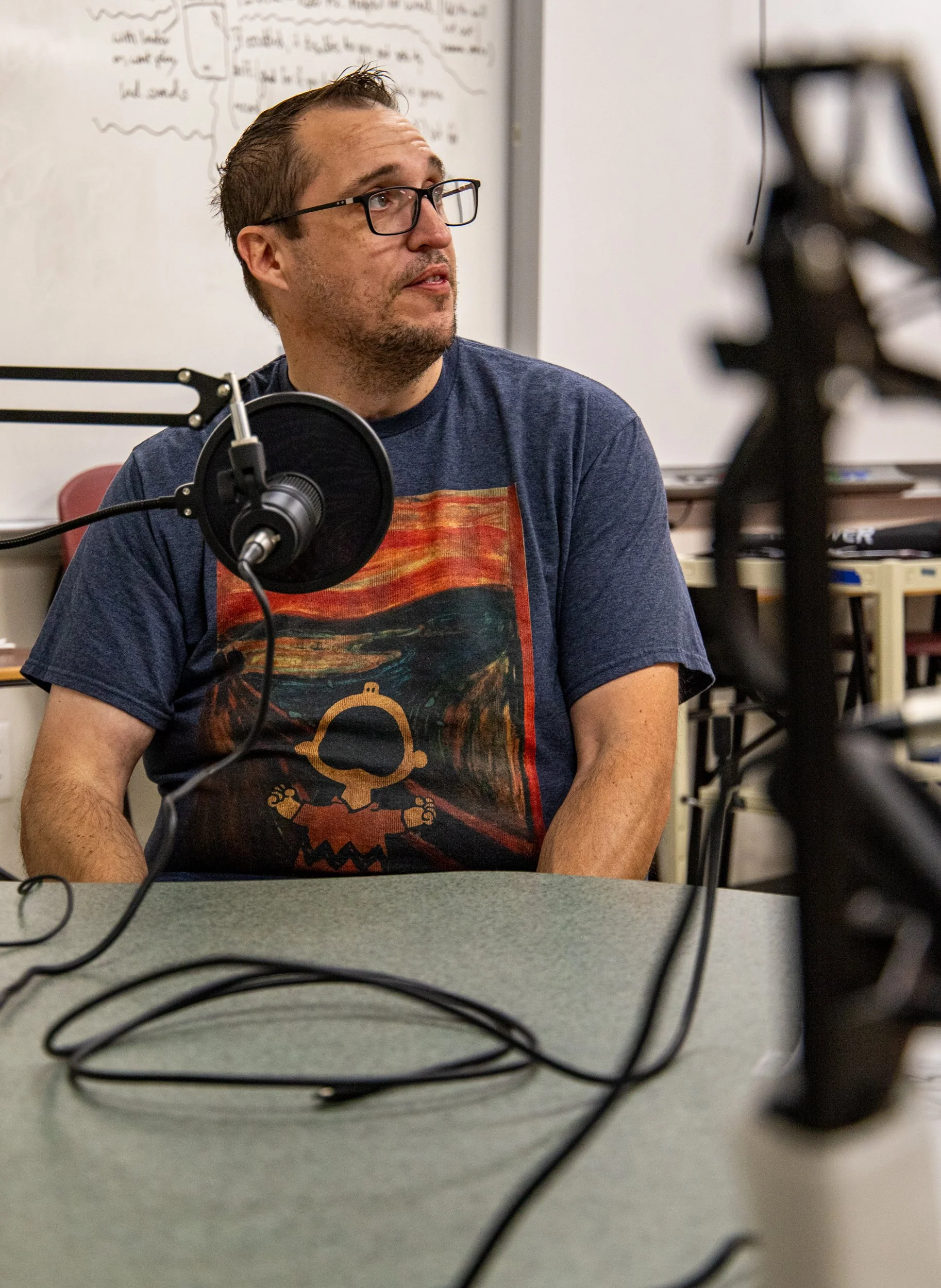
Mr. Corey Hale is one of the journalism teachers at Lewisville High School. After growing up around the area, Hale sparked interest in writing in secondary school where he soon found his passion for news writing. He then continued with writing in college where he got his bachelor's in journalism. Over time he started working with local news publications but instead of climbing the social ladder, Hale decided to settle down and become a teacher, as he always intended to.
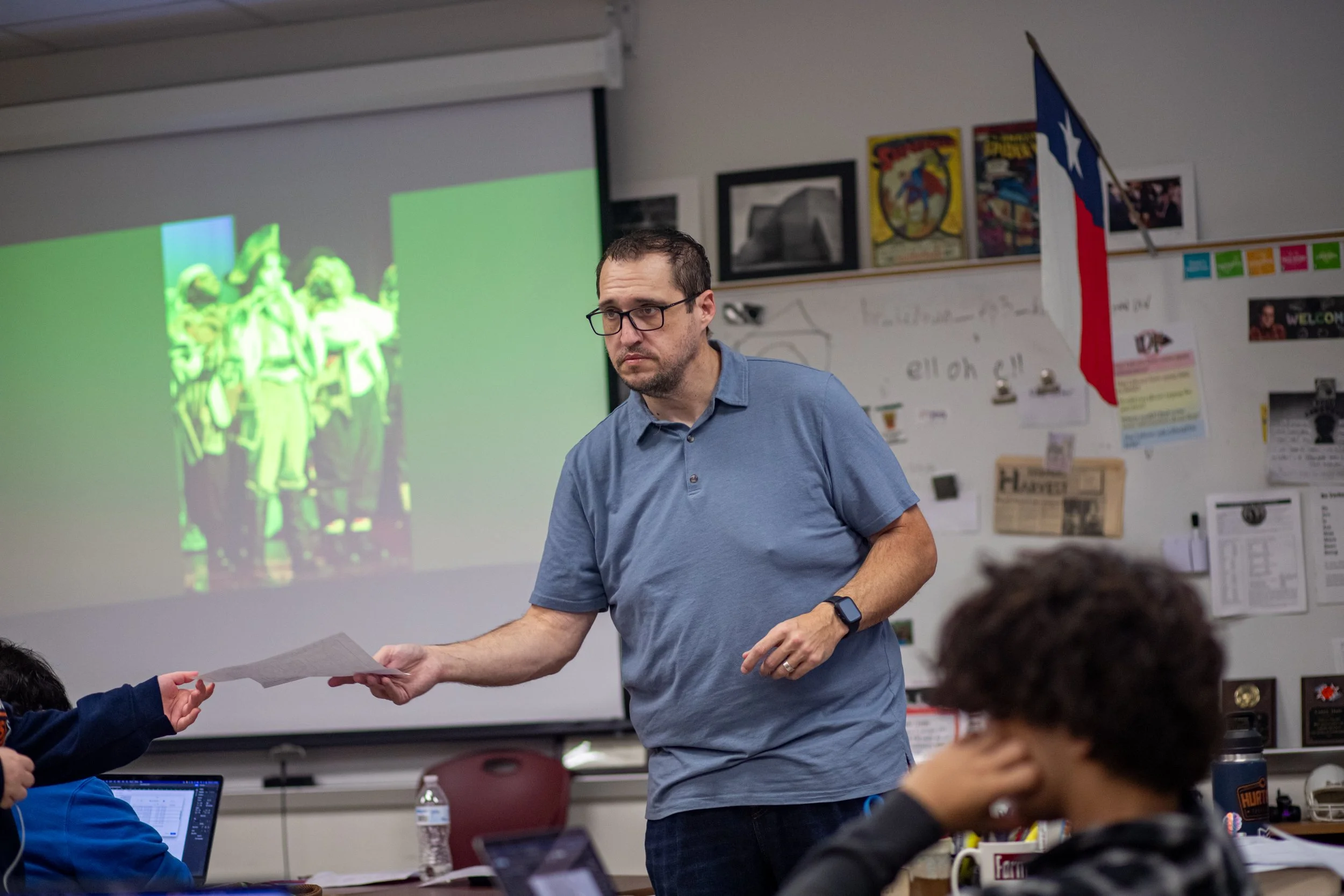
After failing to follow directions, Hale returns a student's yearbook design spread for a lack of effort. Hale said, “Some students didn’t even try” and “don’t want to do anything,” but they are still put in his class with no way out.
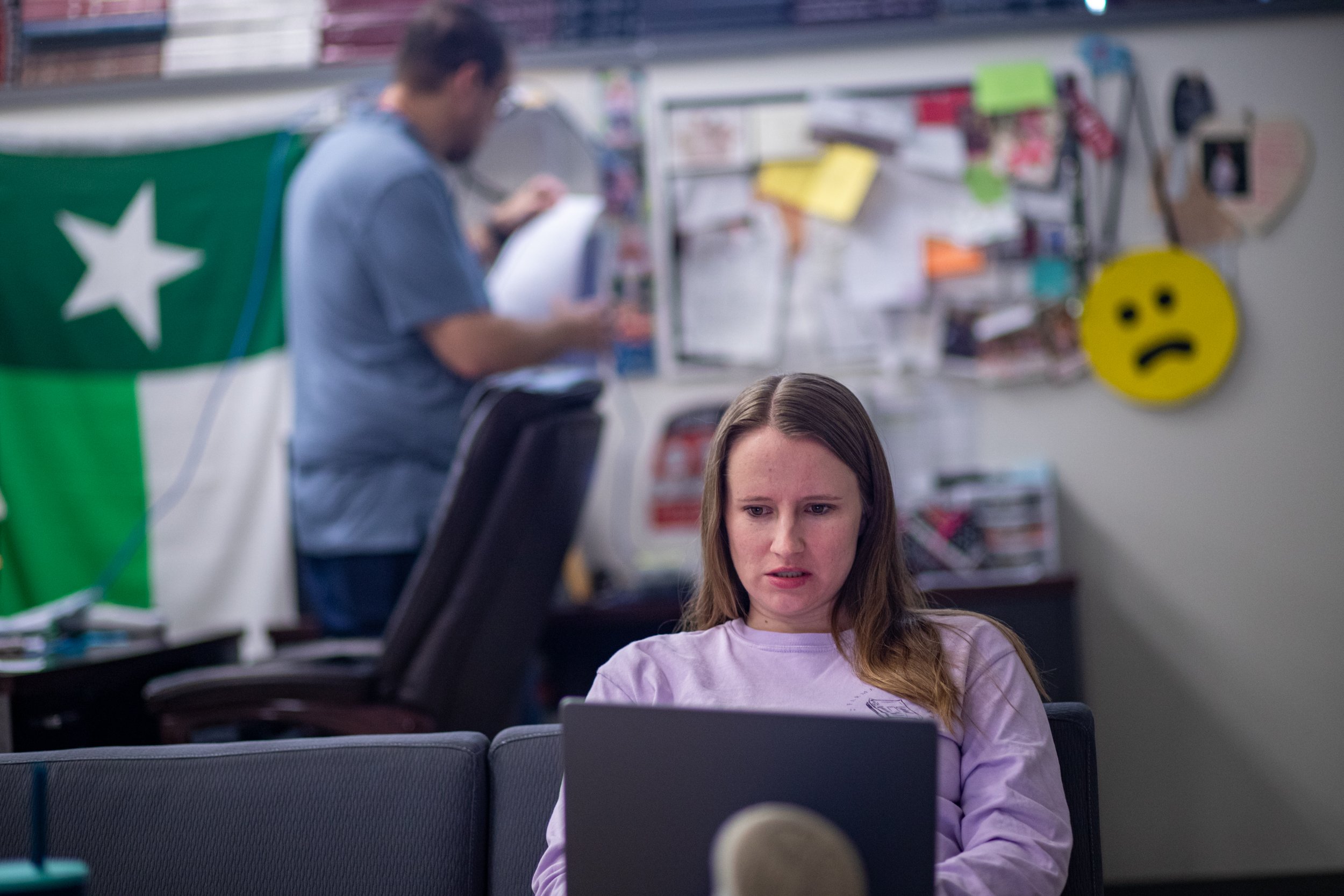
Elizabeth Pinkham, adviser to the Lewisville High School yearbook and newspaper, cleans up last minute sidebars on spreads before sending them off to the printer. Once the printer has received the pages, they cannot be returned for edits, so they are carefully reviewed.
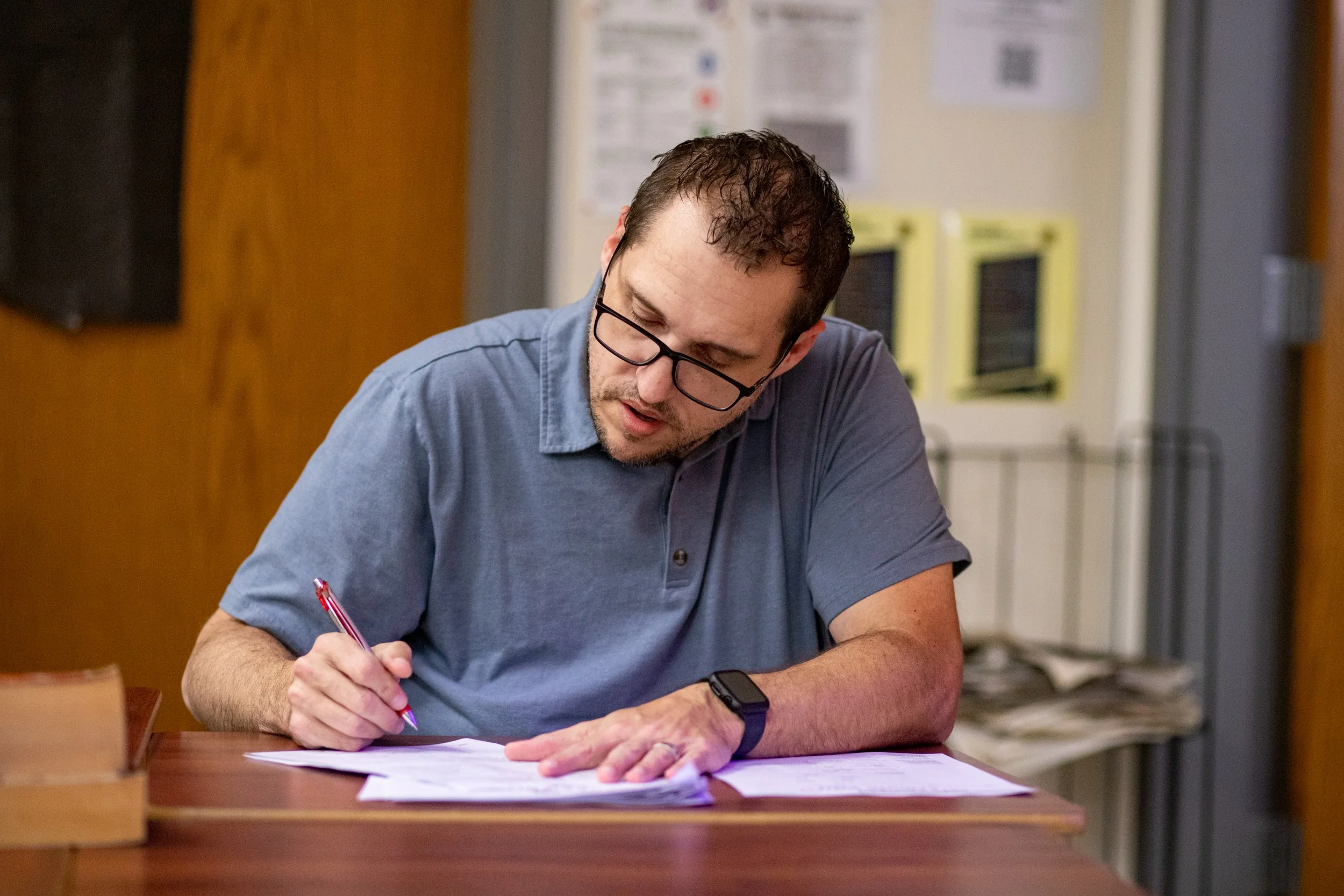
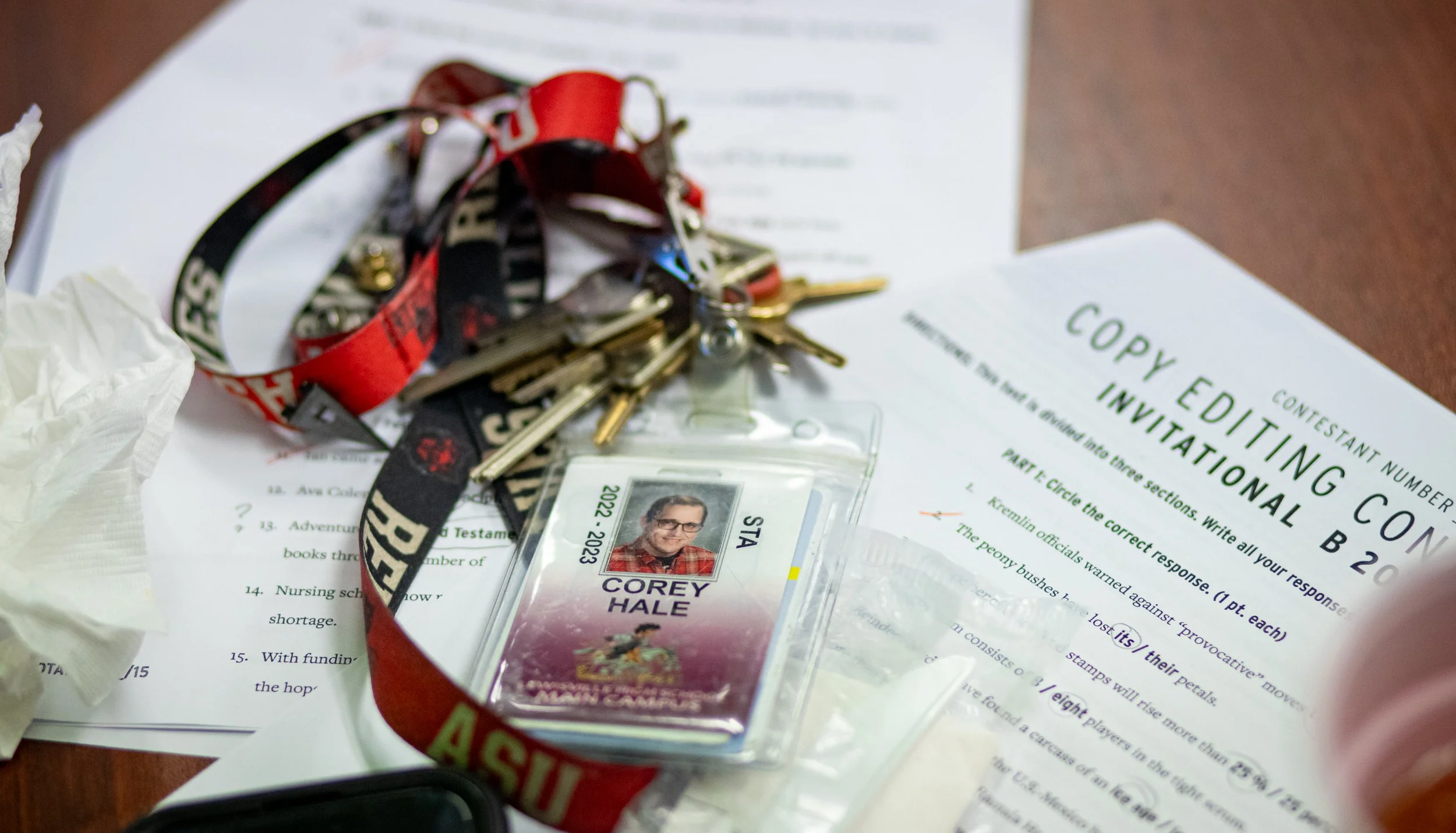
Hale carefully grades the practice UIL Copy Editing Contest his newspaper students took 20 minutes prior. The purpose of the practice tests is to see how the students would score if the contest were a real one and where improvements could be made.
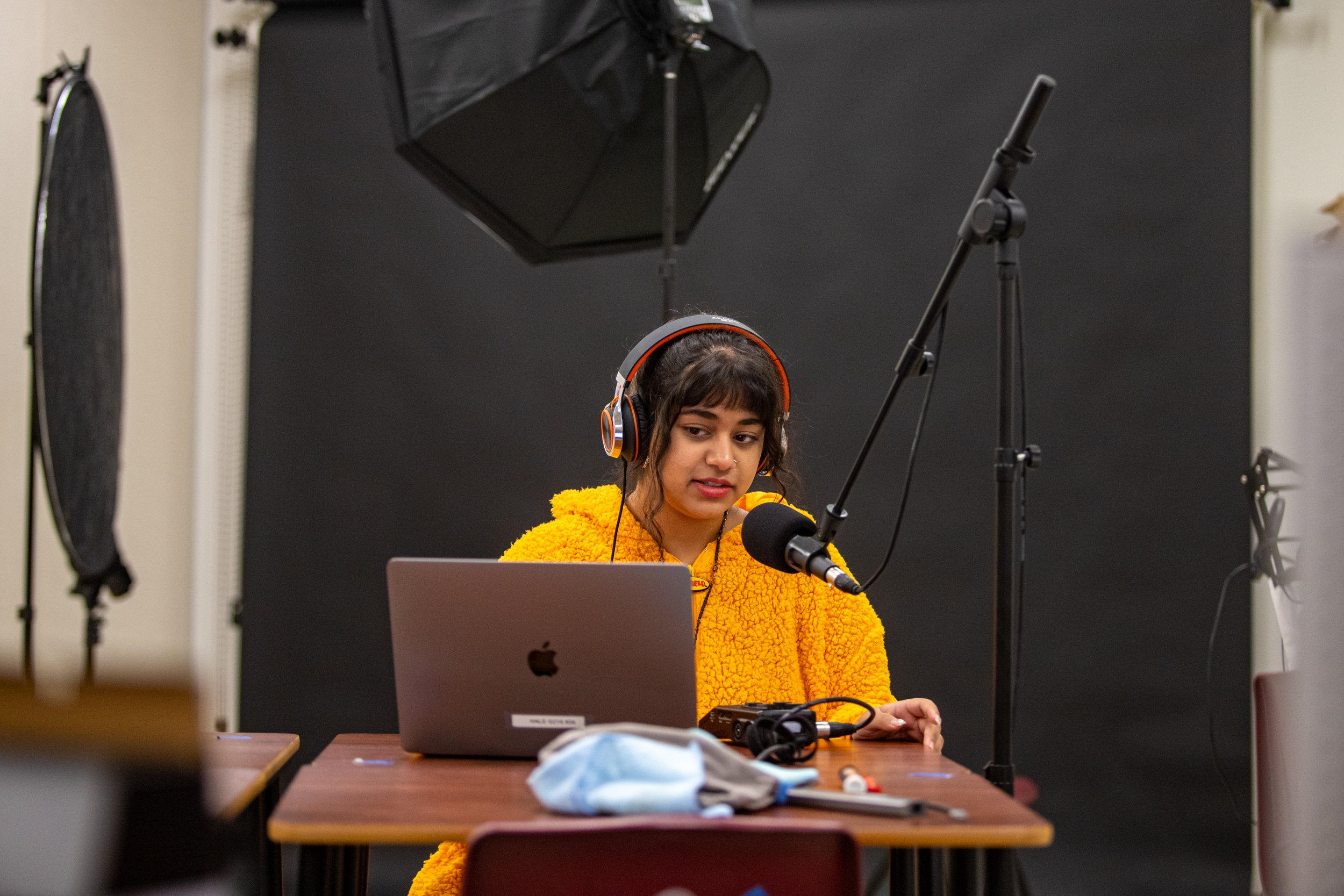
Student Saffa Shaikh records her outro and other soundbites she might need to finish her Halloween-themed podcast. Shaikh is a sophomore who enjoys Halloween, one of her favorite holidays. She thought it would be a good idea to add sound effects of a zombie, owl and a creepy laugh to the background.
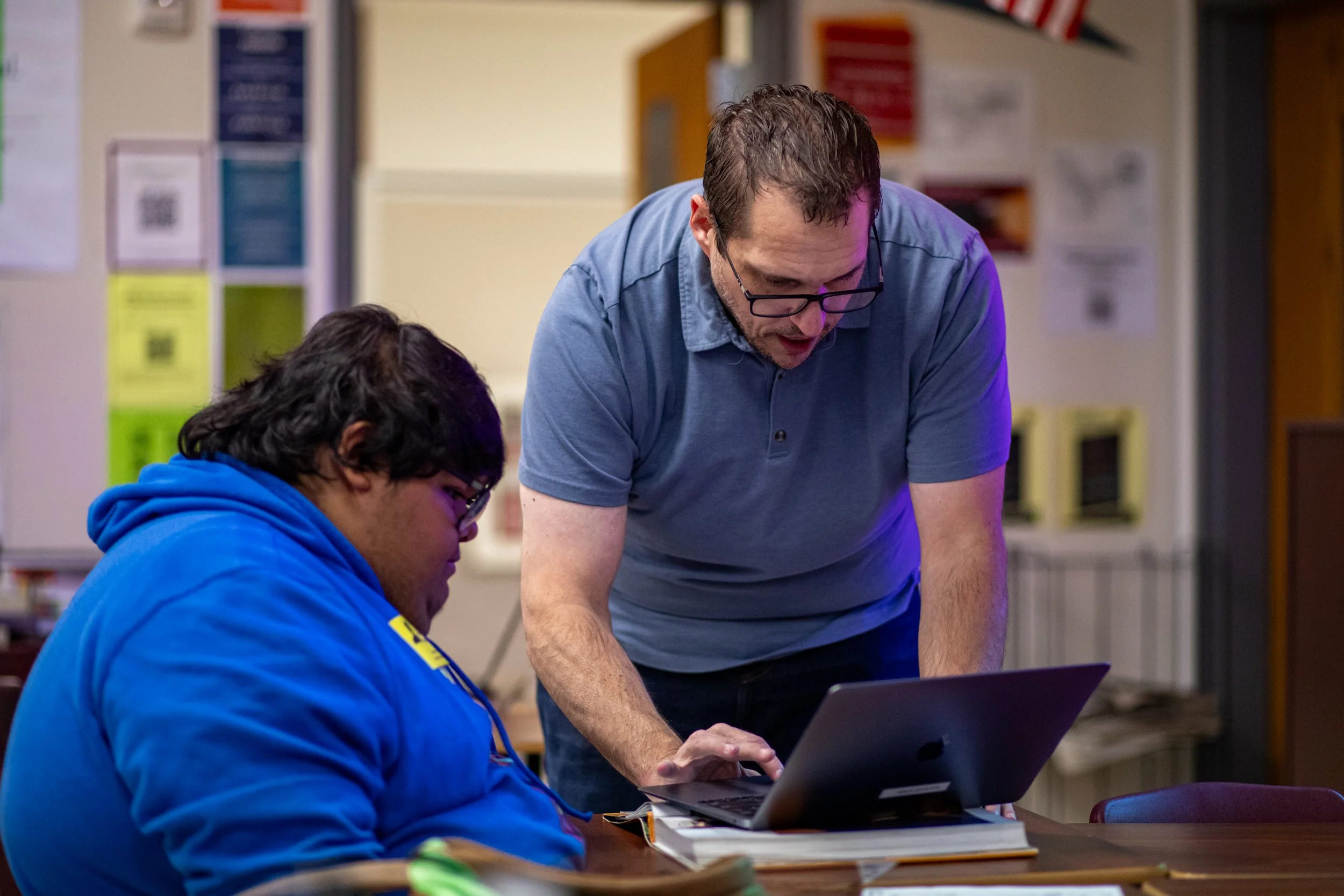
Hale helps a student who struggles with creativity when designing yearbook spreads during his Journalism I class. As long as students put in the effort, Hale does not mind helping out where he can. The only thing Hale cares about is if students are putting in the time.
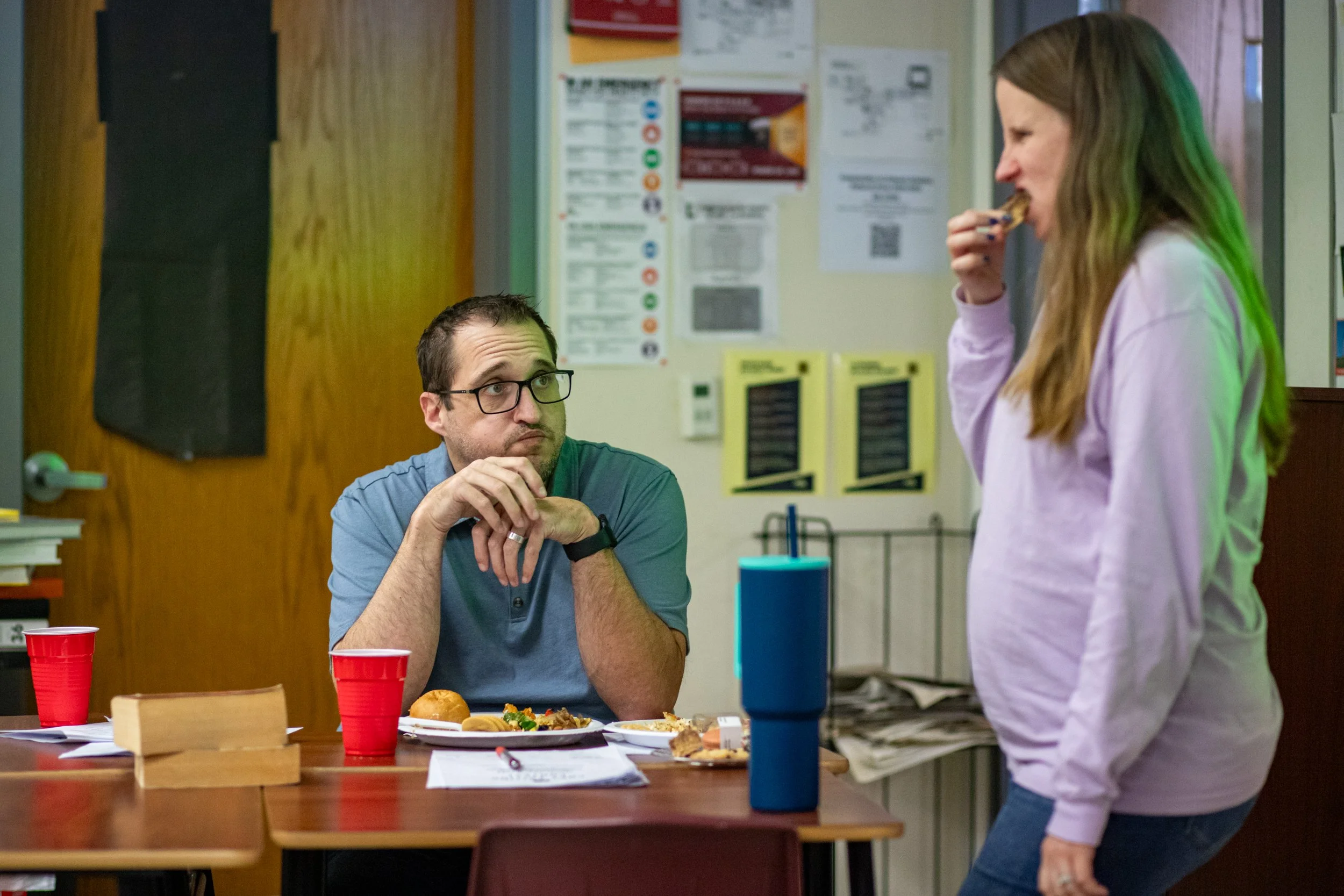
Hale and Pinkham eat together in silence during Hale’s planning period and Pinkham’s passing period before students enter the room. It’s one of the only times when both get together and talk about their day and catch up on life with each other.
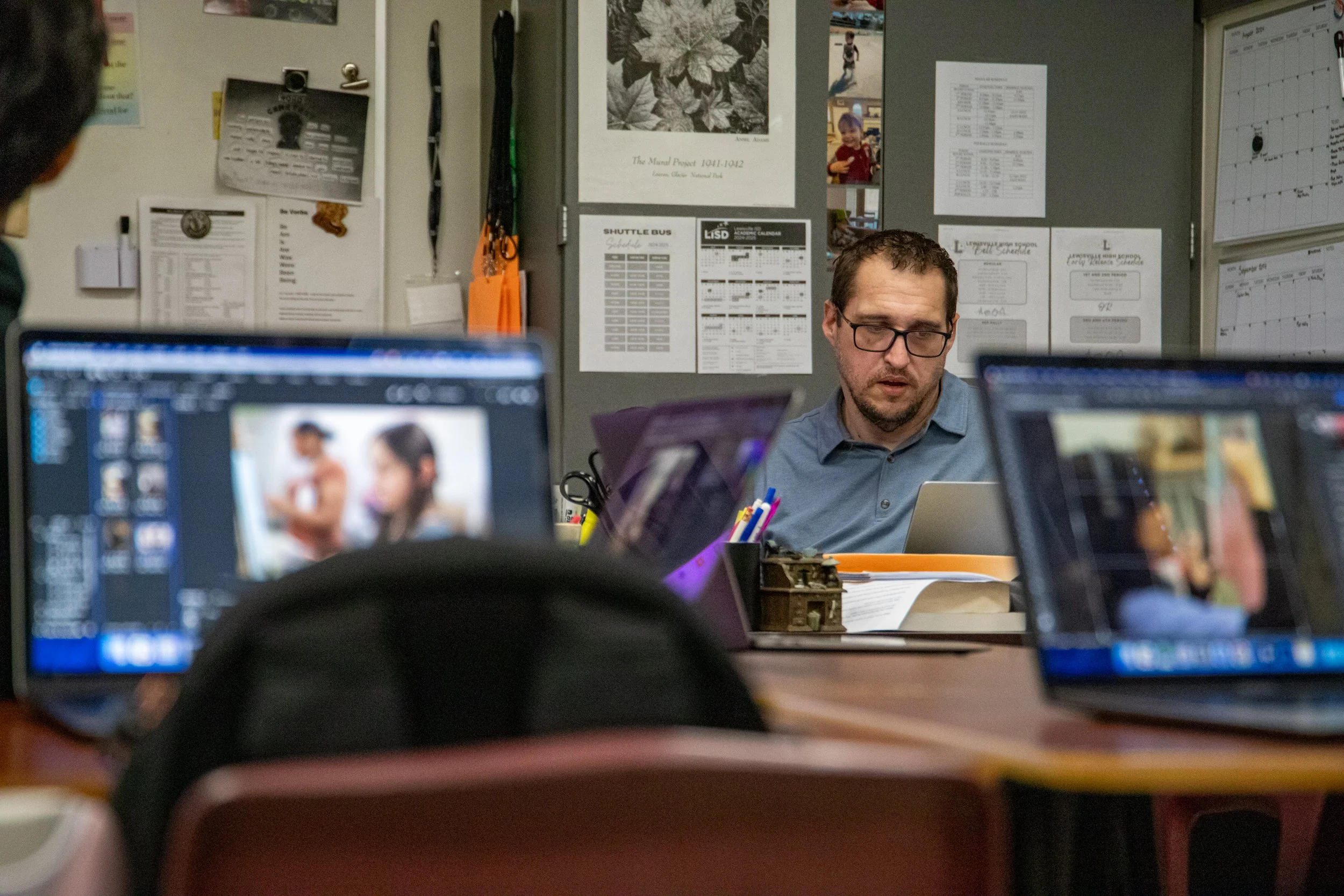
Hale waits for students to finish editing their photos during the Photojournalism I class while responding to emails. He first demonstrated how to edit photos by checking the levels and curves, and now he expects students to do the same.
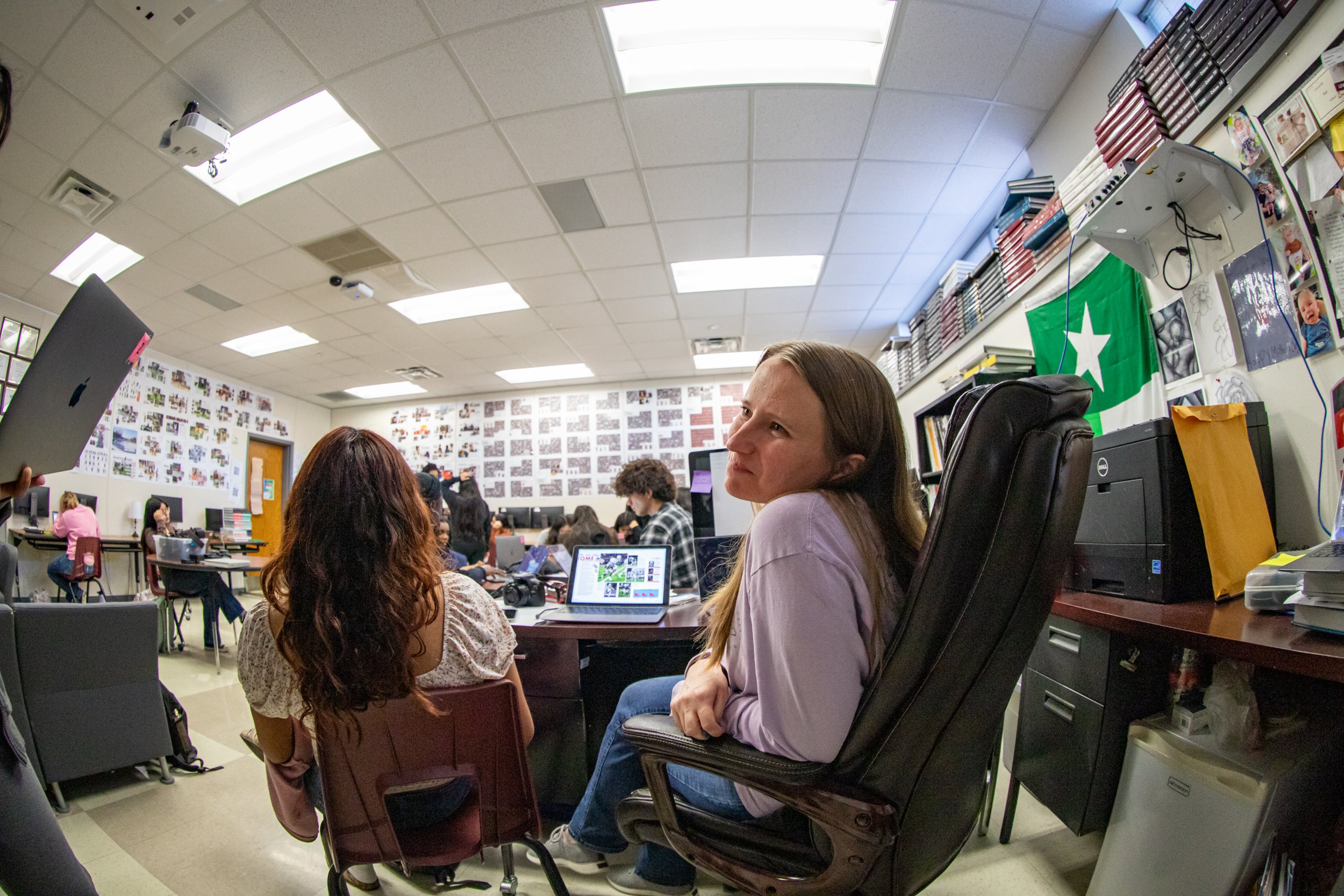
Pinkham smiles at a student who finally realizes they understand the assignment and what is being asked. Pinkham loves it when students have that “Oh” moment and discover things for themselves.
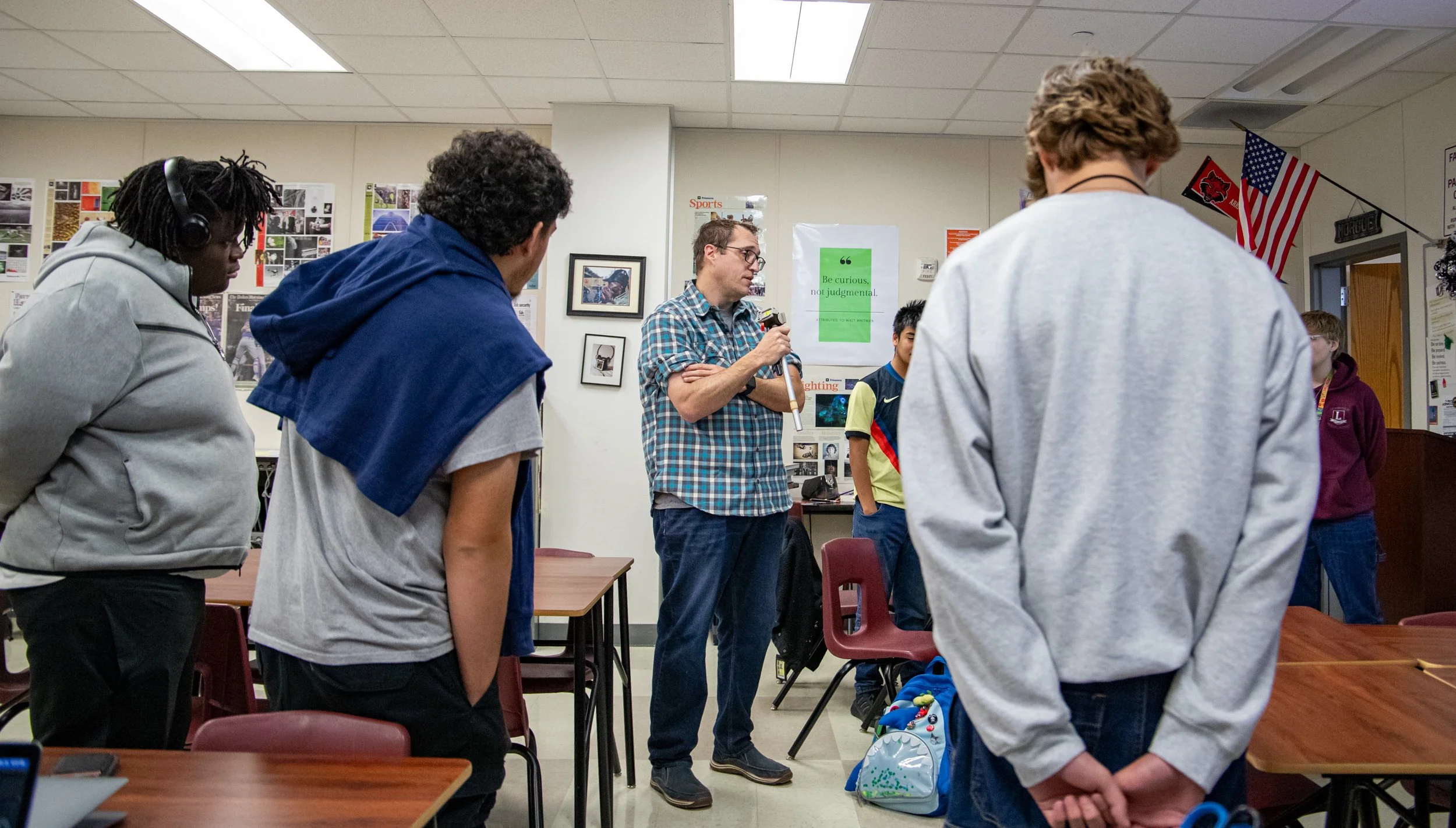
Hale starts the class with his daily “FNR,” which stands for friendship and respect. All his students get together and say one thing they are grateful for before leaving for the break. Hale started doing this with his newspaper class 20+ years ago and plans on doing it until the day he retires.
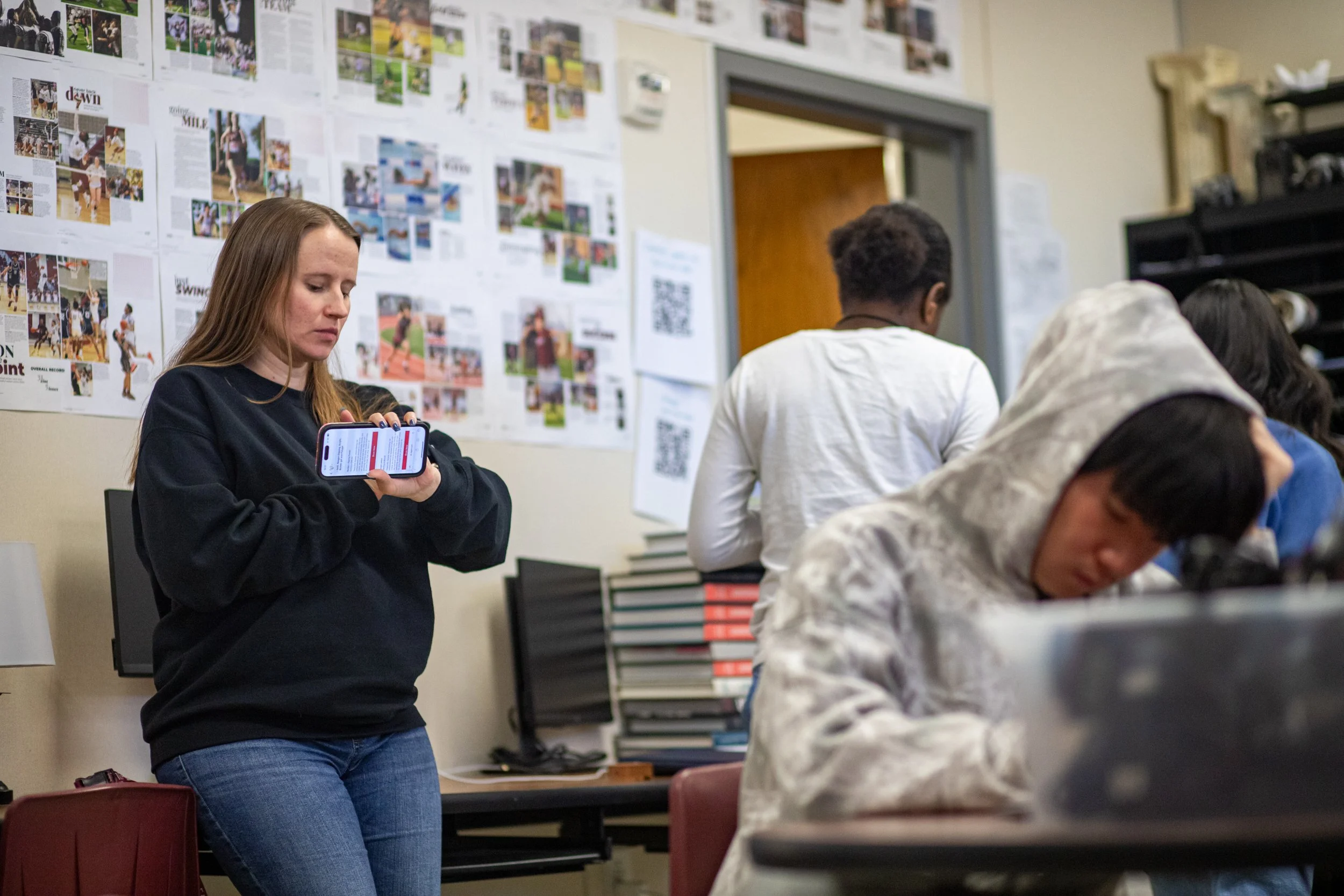
As she waits for the final bell to ring, Pinkham checks the time while trying to schedule an appointment to get her nails done. Thanksgiving Break isn’t just for students. It’s a break for teachers and faculty, too. As Pinkham said, “I need a break from yearbook and getting my nails done is a good way to feel relaxed.”
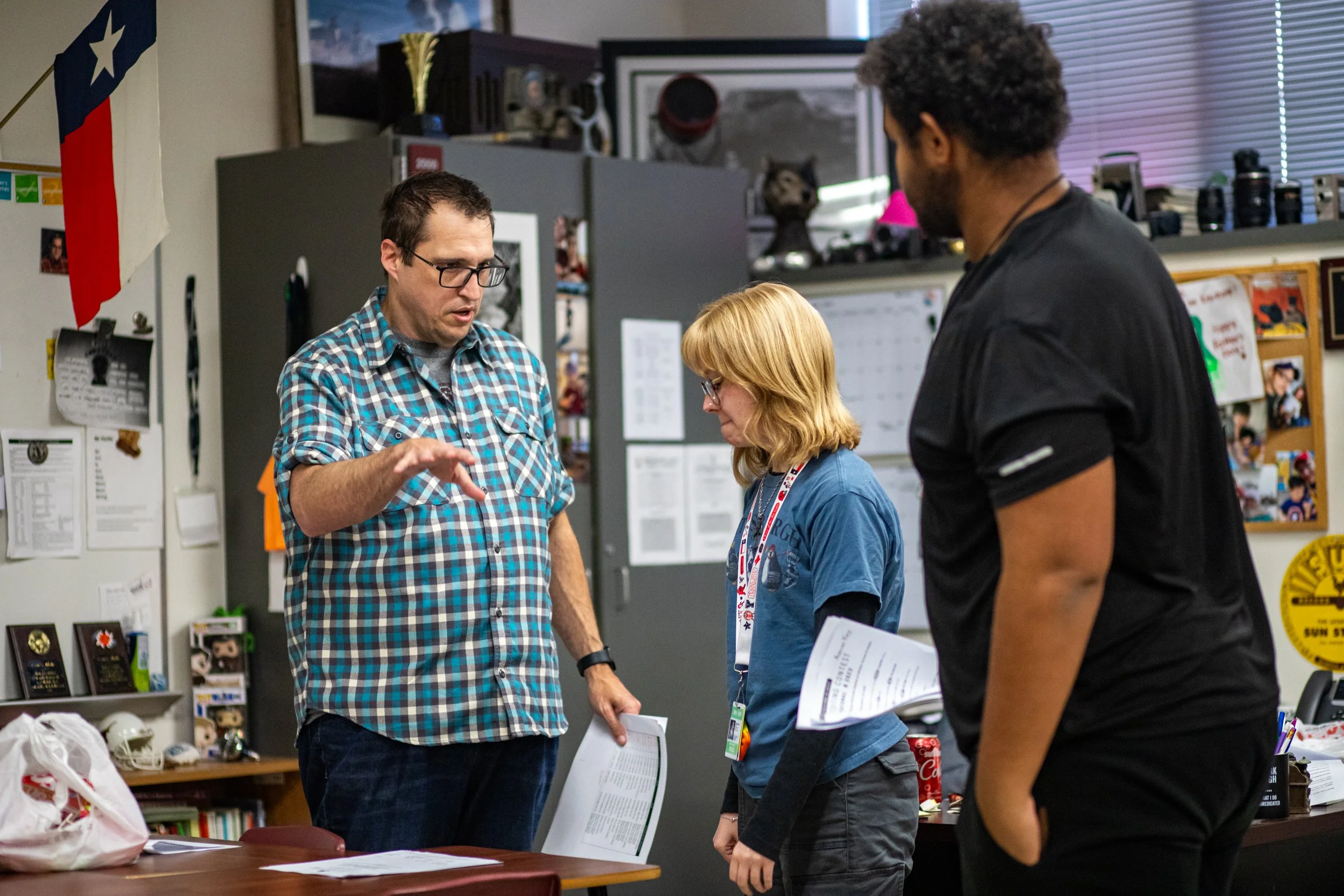
Giving her the hard reality, Hale tells the newspaper's editor-in-chief, Taylor Summer, about the little errors she made during the practice UIL contest. He says he is telling her because “he knows she can get these right” to help her get a higher score in the actual contest.
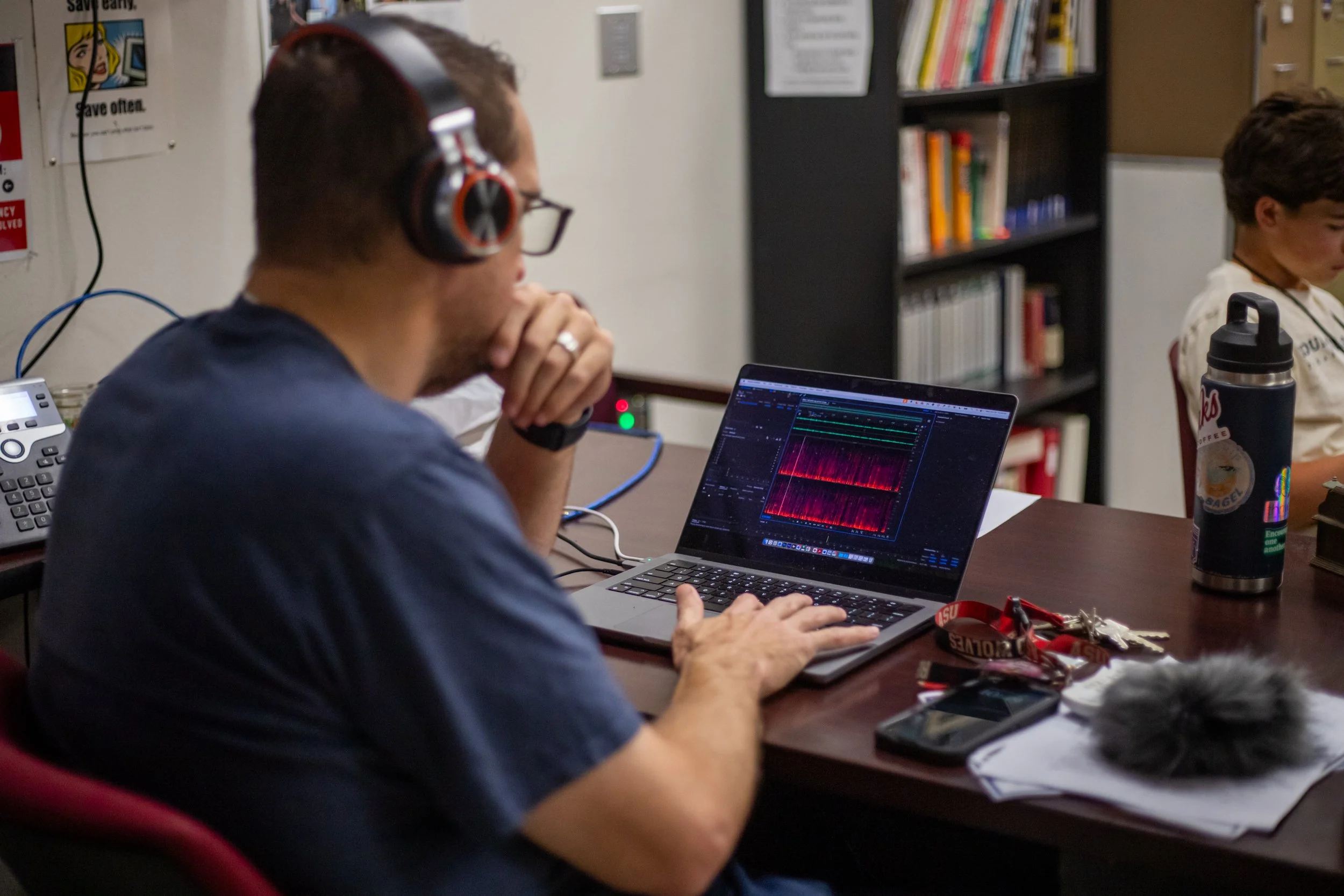
Taking into consideration how much time the students had, Mr. Hale carefully listens to a fellow student's timeline to look for little mistakes to improve on. Since this is the second time the course has been taught, Mr. Hale has learned tips and tricks when it comes to editing to make the process go much smoother.
As students leave for break, Hale can only hope his students make good choices and spend time with their loved ones. For the first time, his mom is not around for the holidays, as he describes her as the “Queen of Christmas.” But, of course, Hale is thankful for his students.